Motorcycle Kidney Belt Manufacturer
OEM & ODM Motorcycle Kidney Belts for Riding Gear Brands
Our motorcycle kidney belts can be customised using elastic support panels, breathable mesh, neoprene, EVA foam, hook-and-loop closures and flexible reinforcement components. From material selection and ergonomic pattern development to prototype sampling and bulk production, we help brands manufacture men’s, women’s and unisex kidney belts in custom widths, support levels, colours and private-label presentations.
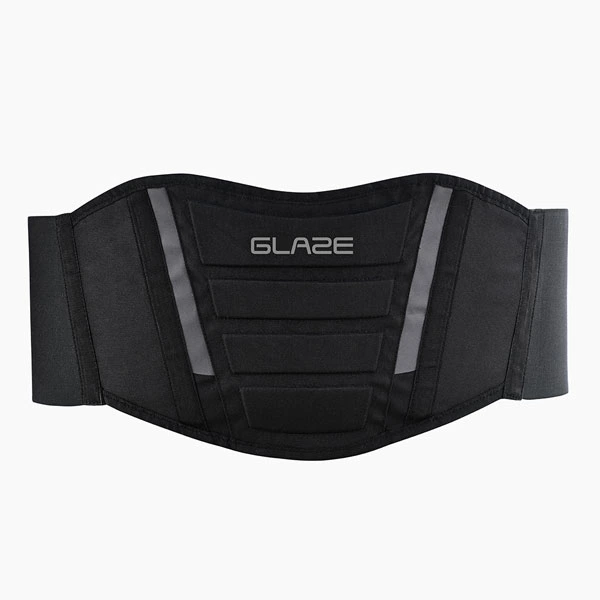
Lumbar Black Motorcycle Kidney Belt
This Motorcycle Kidney Belt provides excellent lower-back and core support for long-distance riding. Built with ergonomic padding, reinforced structure, and adjustable Velcro straps for a secure, comfortable fit. Designed to reduce fatigue and protect the rider’s kidneys during bumps and vibration. Fully customizable for OEM/ODM brands, including logo, color, and materials.
Request a Quotation
All products shown are available for OEM / ODM manufacturing and private label production. Please share your requirements and estimated quantities to receive pricing and production details.
Motorcycle Kidney Belt Design & Manufacturing Guide
Motorcycle Kidney Belts for Riding Support
Each prototype is evaluated for lower-back coverage, closure security, compression, flexibility and comfort before bulk-production approval.
Materials & Support Construction
The performance and comfort of a motorcycle kidney belt depend on the combination of elastic materials, support structures, padding and ventilation. Depending on the product specification, belts can be manufactured using elastic woven fabrics, neoprene, spacer mesh, polyester mesh, foam laminates and technical stretch textiles.
Construction options include reinforced edge binding, bartacks at strap attachment points, breathable perforations, soft internal contact fabrics and low-profile seams. The final construction is selected according to the required support, flexibility, climate, garment weight and target price.
OEM / ODM & Private Label Manufacturing
Glaze provides OEM, ODM and private-label manufacturing services for brands developing custom motorcycle kidney belts and riding-support accessories. Customers may provide complete technical packs, drawings, reference products, measurements, artwork or an initial concept.
Men’s, women’s and unisex sizing can be developed using customer-specific waist ranges. Prototype sampling allows customers to evaluate fit, support, strap tension, ventilation and branding before approving bulk production.
Minimum Order Quantity & Production
Finished kidney belts are packed according to the customer’s private-label requirements and prepared for worldwide export.
Frequently asked questions
Here are some common questions about our company.
Standard production generally begins from 50 pieces per design. The final MOQ depends on the materials, elastic construction, custom colours, moulded components, branding and packaging requirements. Prototype sampling is available before confirming bulk production.
A motorcycle kidney belt is designed to provide adjustable support around the rider’s lower back and abdominal area. It can help create a more secure and supported feeling during riding, particularly during long rides or active off-road use.
Yes. We can develop kidney belts specifically for motocross, enduro and off-road riding with flexible support panels, breathable materials, adjustable compression straps and secure hook-and-loop closures.
Kidney belts can be manufactured using elastic woven fabrics, neoprene, spacer mesh, polyester mesh, EVA foam and technical stretch materials. Flexible support stays or moulded reinforcement components can also be incorporated.
Yes. Support can be adjusted through belt width, padding thickness, elastic tension and the number or stiffness of reinforcement stays. Lightweight, medium-support and more structured constructions can be developed.
Yes. Breathable mesh or perforated materials can be incorporated around the back and side sections to improve airflow and reduce heat build-up during riding.
Yes. Kidney belts can use a main hook-and-loop closure together with secondary elastic compression straps. This allows riders to adjust the overall fit and support level more precisely.
We can develop kidney belts in individual sizes such as S–XXL or in adjustable grouped sizes such as S/M and L/XL. The size range and waist adjustment can be developed according to the customer’s target market.
Yes. Customers can customise fabrics, elastic colours, edge binding, closures and branding. Options include screen printing, embroidery, silicone transfers, rubber patches, woven labels and branded retail packaging.
Not necessarily. A support or kidney belt should not be marketed as an impact-protective back protector unless it has been specifically designed, tested and certified for that protective function. If impact protection is required, the product should be developed and tested according to the applicable protective-equipment standard.